The Essential Guide to Autism
October 10, 2009 by admin
Filed under Autism Help and Treatments
If you’re really worried a loved one with autism might never truly enjoy life to the full, this may be the most critically important guide you’ll ever read.
By reading the Essential Guide to Autism you will discover proven methods to maximize the potential of someone with autism.
The Essential Guide to Autism covers the most effective treatment options available, as well as strategies to manage many aspects of life as the person with autism moves toward adulthood.
Aspergers Resource Guides
October 5, 2009 by admin
Filed under Autism Help and Treatments
The 7 Biggest Problems You’ll Experience with Your Aspergers Child –And How to Overcome Them
- Problems in the home for siblings–As the parent of a child with Aspergers I’m sure you don’t need me to tell you that feelings of worry and guilt about the other siblings can just eat away at you inside.
- Problems in the teenage years–The raging hormones, selfish attitudes and temper tantrums of teenage years combined with the challenges of Aspergers can make teenage years seem a bit like a living hell at times.
- Problems understanding the different therapies available –There are so many types of therapy available, but most of these approaches cost a great deal of time, money and effort and so the big question I get asked is “Are they really worth it or just a big con?”
Autism Symptoms & Treatments
October 1, 2009 by admin
Filed under Autism Help and Treatments
- Does my child really have autism?
- What will his or her future be like?
- How can I identify with what they are thinking and feeling?
- What can I do to enhance my autistic child’s future?
- What are the autistic signs, causes, and symptoms?
No disorder is as confusing to comprehend or as complex to diagnose as autism. And, no disorder has more myths and misconceptions surrounding it than autism.
Dr. Newmark reveals the truth about autism causes, symptoms most of the internet information my sister-in-law found wasn’t medical, but advice, opinions and words of support written by other parents.
Listen to leading autism expert, Dr. Newmark, as he reveals the results of many years of natural and medical treatments covering all treatment options, some of which may be new to you. You will also learn which natural treatments provide a definate reduction in symptoms in many children with autism. And soy?…Don’t rely on Soy until you hear this interview. And Dr. Newmark discusses an organization that may have a doctor that is an autism expert in your area.
Reimbursement for Your Noah’s World Bed
September 28, 2009 by Chris
Filed under About Autism, Autism Help and Treatments
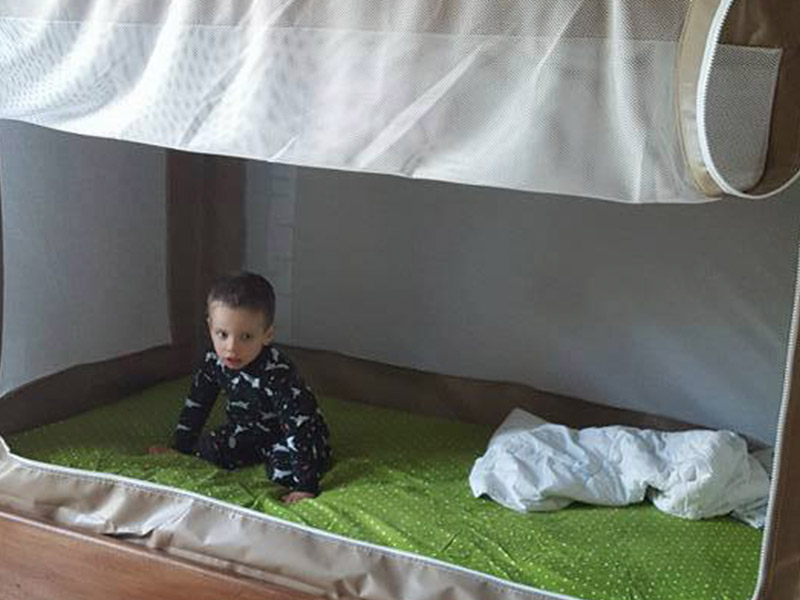
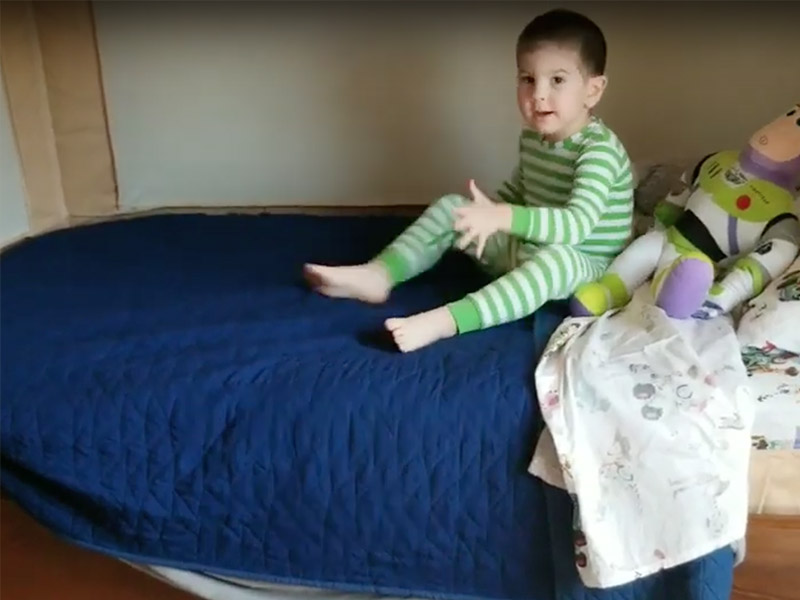
We understand that having a child with autism can be very difficult at times. We truly believe that this bed will change your life by giving you peace of mind knowing that your child is safe during the night. One of the biggest obstacles that prevents families from owning a bed like this is money. Even though we have tried to reduce the cost to make it affordable for everyone, cost may still be an issue. To help get a bed in your home, we have been working with families to get the Noah’s World Bed paid for by Medicaid. We have been successful in three states–New York, Florida and Virginia–and are working for approval in other states.
We would like to share the steps we have taken to get coverage. This are not difficult, and if you follow these steps, you could have a bed in your home soon. By following these steps, you could have a bed in your home and know your child is safe without spending money that you need.
We would also like to offer you a way to make some money. If you are in one of the states that is not been approved for coverage yet and would like to document the steps needed to get approval. Please fill out the contact form and let us know. We will pay you.
Causes of Autism – Is it Genetic Or the Environment?
September 4, 2009 by admin
Filed under Autism Help and Treatments
The causes of autism is many and varied, but with certainty the occurrences worldwide in every ethnic and social class is on the rise in the last 30 years. Statistics show more boys than girls are susceptible and tentatively 90% of autism cases are genetic. Some recent research pin point a link between genetic and environment but nothing is known for certain.
One study found the higher parental age may be a factor with genetic material integrity. Another study, with research inconclusive stated prenatal environment with exposure to pesticides especially in the first 8 weeks of gestation of the fetus may be the cause. And then there is the infectious diseases possibly rubella virus could be the culprit. There are many Causes of Autism, but there are many more that could be multiple factors in each cause diagnosed.
Use of Melatonin as Sleep Aid for Children with Autism
July 24, 2009 by Chris
Filed under Autism Help and Treatments
Sleep disorders in children with autism are a consistent and pervasive problem. According to most studies, approximately 80 percent of children with autism have some sort of sleep disorder. (According to the University of California at Davis MIND Institute, up to 89 percent of autistic children have a sleep disorder.) There a number of different theories on ways to ease the transition into sleep for autistic children: having a nighttime ritual, consistent bedtime, and sensory integration, among others.
One way to aid sleep that is gaining traction is the use of melatonin. Melatonin is a natural hormone produced by the pineal gland (and regulated by serotonin) that governs a person’s sleep pattern. There has been some research that shows that many people with autism have a significant imbalance in their serotonin levels. When these serotonin levels are off, the body will have difficulty regulating the amount of melatonin produced by the pineal gland. This may be one reason why many children with autism have difficulties sleeping.
Recently, there was a small study (12 children) regarding the potential use of melatonin as a sleep aid published in the Journal of Clinical Sleep Medicine (April 15, 2009) that showed some potential. For this small sample, children ranging from 2 to 15 years old took melatonin for two weeks and a placebo for two weeks. Overall, the study showed some promise.
Parents With Autistic Children Are Not Alone
July 21, 2009 by Chris
Filed under Autism Help and Treatments
You and your wife are at a cocktail party. Men and women divide, equally and normally along gender lines. Soon, the conversation turns from work and the economy to how the family is doing. You hate this conversation. As the circle begins to close in around you, you take a step back so that you are on the outside.
One friend brags about how his precious little Brittany is already sleeping through the night at 3½ months. Another friend starts talking about how he is sure that his precocious prodigy, Biff, will be a phenomenal athlete and scholar and he knows this because Biff is way advanced for a 2-year-old and he knows because he read an article once…that would be your friend who read the article, not Biff. Although if you ask your friend, he is certain that Biff can read because he held up a card on your birthday and said, “Dadadadada” meaning that the card was for dad, even though your friend’s name is, Hampton, so…yeah.
You listen quietly, still meekly standing on the outside of the circle while your friends brag about how great their children are. You aren’t sure what to say, because your child is autistic.
Resources for Parents
July 20, 2009 by Chris
Filed under Autism Help and Treatments
Resources for Parents
In the “old days” (say, before the mid-1990s), there was no such thing as the internet. When a person wanted to find out information, he or she put on hiking boots and started the long uphill walk (both ways in the snow) to the local community library. Once there, he or she had to look for resources and information in a card catalogue, which directed people to various books throughout the library. Of course, libraries continue to be great free resources of information.
Today, we also have the world wide web and all of the resources that are associated with it. Luckily, most libraries have internet connections so new resources and research are also available to everyone—even if you do not have internet access in your home. As autism gains recognition, there are more and more websites devoted to general information about the disorder. Even better, institutions and colleges that used to be virtually off limits to the general public, now throw open their virtual doors allowing hoi polloi to browse their voluminous tomes of information and research.
Raising a Child with Autism
July 20, 2009 by Chris
Filed under Autism Help and Treatments
Raising a Child with Autism
My grandmother rarely talks about raising her third son, who was autistic. He was defined as autistic almost before there was a classical definition for autism. My dad and uncles remember what life was like having an autistic child in the family. The attention was taken away from them, and they witnessed lots of their brother’s temper tantrums. They also remember my grandfather gently cooing, in the hopes that he could calm him down at night, “Mikey Pete, Mikey Pete, you’re so sweet, don’t rock that seat.” Sadly, it never quite settled down their brother.
Ultimately, my grandparents were unable to take care of my uncle, and they sent him away to a state institution, as many other parents of autistic children did in the late 1950s and early 1960s. This was before Sen. Robert F. Kennedy stood on the steps of Willowbrook calling the institution “criminal.” They didn’t know how awful it was. Once they did, it was too late.
Getting Good Night’s Sleep with Autistic Children
July 20, 2009 by Chris
Filed under Autism Help and Treatments
Getting Good Night’s Sleep with Autistic Children
It’s 2 a.m.; do you know where your child is? For many parents of children with autism, the answer could very well be, “No.” As more and more funding comes from the federal government and private donors to research autism, leaders in the field are figuring out what many parents already know: frequently, children who are diagnosed with autism are unable to sleep.
Whether it’s because your child cannot go to sleep or because he or she wakes up intermittently throughout the night, your child is just not going to sleep… and as a result, neither are you. Both of you are well under the time required to have what is considered a good night sleep (approximately 10 hours for your child, and just about 8 hours for you). You’re practically worn down to a nub while your child is just as hyper as he or she was the day before, and the day before that, and the day before that, etc.